
What’s the most fun way to exercise?
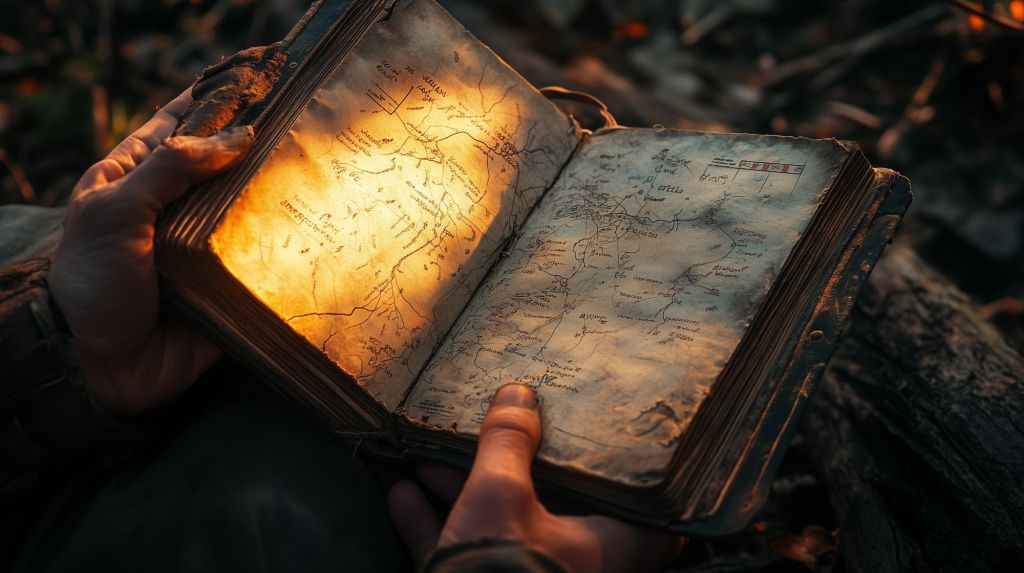
The first rays of dawn filtered through the ancient canopy of the Whispering Woods, painting dappled patterns across my weathered journal. I traced my fingers over the faded map of Lumevale, smiling at the countless annotations that marked my journeys across this realm of wonders. Twenty years I’ve roamed these lands—from the crystalline spires of Azurehaven to the bubbling tar pits of the Charred Expanse—and still, each morning brings the promise of new discovery.
I am Riven Dawntracker, cartographer, treasure-hunter, and occasional royal messenger when coin runs short. My body bears the marks of countless adventures: a scar from the claws of the Mistmoor wyvern curves along my ribs; my left arm still aches when rain approaches, a memento from an unfortunate encounter with the Stone Giants of Felspire; and my once-brown hair now bears streaks of silver that have nothing to do with age and everything to do with a brief but memorable imprisonment by the Fae Court of Winter.
Yet despite these badges of experience, I’ve maintained the vigor needed to outrun temple guardians and outfight brigands, something many of my contemporaries cannot claim. The secret to this endurance? A tradition I discovered in the isolated valley settlements of the Cloudpiercer Mountains, where warriors have trained for centuries in what they call “The Dancing Blades.”
Most travelers who seek physical prowess gravitate toward the fighting pits of Ironhaven or the monastic training grounds of the Serene Brotherhood. I’ve sampled both—the brutal efficiency of Ironhaven’s gladiatorial regimen and the measured discipline of the Brotherhood’s stone-lifting rituals. But neither compares to the exhilaration of The Dancing Blades.
Picture this: a circular clearing surrounded by stands of silver-barked aethertrees, their phosphorescent leaves casting an ethereal glow even in daylight. Two dozen men and women, ranging from fresh-faced youths to white-haired elders, move in perfect synchronicity, each wielding twin shortswords of polished moonstone. Their movements flow from stance to stance like water over river stones—no sharp edges, no wasted energy, just the continuous dance of balanced opposition.
The first time I witnessed this ritual in the remote village of Highwind Pass, I mistook it for some religious ceremony. Elder Kalina, her face a magnificent map of wrinkles and her arms corded with muscle that would shame warriors half her age, laughed at my confusion.
“The body is a vessel for life’s energy,” she told me, pressing a pair of practice blades into my reluctant hands. “Move it with intention, with joy, and it rewards you with strength that outlasts any gained through mere suffering.”
I was skeptical, of course. I’d built my physique through practical means—climbing sheer cliff faces to reach hidden temples, swimming against treacherous currents to explore submerged ruins, sprinting across burning deserts with treasure hunters and bandits alike hot on my heels. Training that didn’t involve immediate survival seemed… indulgent.
But Kalina insisted I join the morning ritual before continuing my journey to catalog the mysterious floating islands that occasionally appeared above the valley. “One session,” she promised with a knowing smile. “If you find no value, you may depart with our blessing and supplies.”
What followed was the most humbling and exhilarating physical experience of my life. The Dancing Blades begins slowly—gentle rotations of joints, careful stretches that awaken every muscle. Then the rhythm quickens. The wooden practice blades become extensions of your arms as you weave through a choreographed sequence that gradually incorporates lunges, spins, leaps, and controlled falls.
Each movement flows into the next with mathematical precision, working muscle groups I hadn’t realized existed. The resistance of the blades against air creates just enough tension to strengthen without straining. The footwork—a complex pattern that requires absolute focus—improves balance and agility while the controlled breathing oxygenates blood and clears the mind.
What makes this practice truly extraordinary, however, is its communal nature. Unlike the solitary training regimens of many warriors, The Dancing Blades requires harmonization with others. You must match your timing to the group, anticipate shifts in direction, maintain precise distances. The exercise becomes a conversation between bodies, a negotiation of shared space.
By the ritual’s end, my tunic clung to my skin, saturated with sweat. My lungs burned with each breath. My muscles trembled with exquisite fatigue. Yet I felt more alive than I had in years, my mind crystal clear, my body humming with energy despite its exhaustion.
I remained in that village for three weeks, joining The Dancing Blades each morning and evening. When I finally departed, Kalina presented me with a set of lightweight practice blades carved from silvery whitewood.
“The true magic of the dance,” she said as she pressed them into my hands, “is that it requires no special ground, no elaborate equipment. Only willing flesh, determined spirit, and perhaps a companion or two.”
In the years since, I’ve maintained this practice across the diverse landscapes of Lumevale. I’ve performed The Dancing Blades atop the emerald cliffs of Viridian Bay, in the echoing chambers of abandoned dwarven mines, and once—memorably—on the heaving deck of a smuggler’s ship during a storm. I’ve taught the sequences to fellow travelers, to curious villagers, even to a particularly receptive band of mercenaries who now incorporate the practice into their daily routine.
When I return to cities between expeditions, I often find conventionally trained warriors scoffing at my methods. They prefer their grueling marches beneath burning suns, their endless repetitions of single movements, their tests of endurance that leave bodies broken more often than strengthened. They see exercise as punishment, training as suffering.
But I’ve outpaced younger men up mountain trails. I’ve maintained fighting form through weeks of limited rations. I’ve recovered from injuries that would have permanently sidelined others. All because I discovered that the most effective exercise isn’t the most punishing—it’s the most engaging.
The Dancing Blades transformed physical training from obligation to celebration, from endurance to artistry. There is profound joy in feeling your body respond with increasing precision to the demands you place upon it, in sensing muscles strengthen not through their breaking but through their awakening.
Tomorrow I depart for the rumored Crystal Forests beyond the northwestern territories of Lumevale. The journey will require crossing the Razorback Mountains and navigating the treacherous Mistmoor Swamps. But each morning and evening, wherever I make camp, I will unsheathe my whitewood blades and dance, keeping my body ready for whatever challenges await—and honoring the simple truth that the best exercise is the one that fills you with life rather than merely postponing death.
Thank you for reading this short story. I hope that you liked it. Leave me a comment and let me know if you did. Please consider subscribing to my newsletter for special future updates. If you love these stories then you can find two volumes of them in Ebook form on Amazon. You can get the first volume for free at this link.


Leave a Reply