
If you had to change your name, what would your new name be?
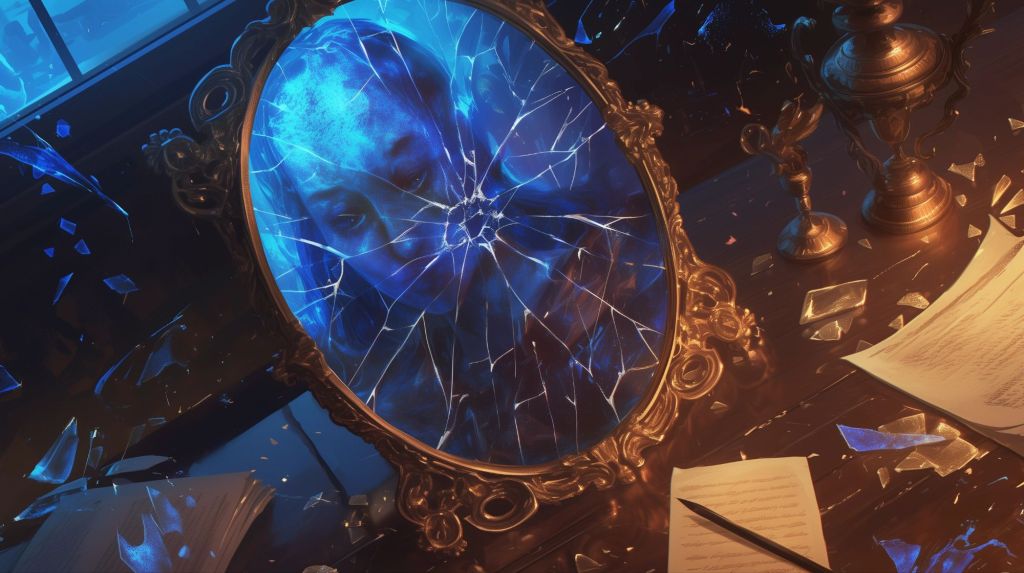
The obsidian scrying mirror lay cracked across my writing desk, its fractured surface reflecting seventeen different versions of a face I could no longer safely claim as my own. Rosalind Nighthaven—the name that had carried me through twenty-eight years of life in Lumenvale’s shadowed corners—now tasted like ash and endings on my tongue, each syllable a beacon calling forth hunters whose patience rivaled that of ancient stones.
My fingers trembled as they traced the silver sigil carved into my grandmother’s mahogany desk, the protective ward that had kept this sanctuary hidden from prying eyes for three generations of women who understood that knowledge and danger walked hand in hand through the world’s darker corridors. The scent of burning sage hung thick in the air, mingling with the metallic tang of fear that had become my constant companion since the Obsidian Circle learned my true name and began their relentless pursuit.
“A name,” I whispered to the empty chamber, my voice echoing off shelves lined with tomes whose very existence would condemn their owner in the eyes of Lumenvale’s more conservative magical authorities, “is supposed to be an anchor. Something that roots you to yourself, to your history, to the threads that weave your soul into the tapestry of existence.”
But anchors, I had learned through bitter experience, could also drag you beneath the waves when storms arose with sufficient fury.
The letter that had changed everything lay open beside the broken mirror, its parchment stained with tears I had shed three days ago when hope finally surrendered to necessity. Cordelia’s elegant script, usually flowing with the confidence of someone who had navigated Lumenvale’s political intrigues for four decades, trembled with urgency that made my chest tighten with each reread:
*My dearest Rose—by the time you receive this, they will have extracted your true name from Marcus. He held out longer than any of us dared hope, but the Obsidian Circle’s persuasion techniques break even the strongest eventually. You have perhaps hours before they complete the binding ritual that will allow them to track you across any distance, through any ward, into any sanctuary you might seek. Burn this letter. Burn everything that carries your name. Become someone else, quickly and completely, or join Marcus in whatever afterlife awaits those who dare challenge the established order.*
Three days of paralyzing terror had crystallized into this moment of decision. The ritual components lay arranged before me with ceremonial precision—a silver chalice filled with water drawn from Lumenvale’s deepest wellspring, seven candles whose flames danced with colors that had no names in mortal tongues, and a blade forged from meteoric iron that hummed with the frequency of unmaking.
To sever one’s connection to their birth name required more than simple abandonment. The threads that bound identity to essence had to be cut with surgical precision, each tie dissolved through incantations that carried the risk of erasing more than intended. I had known practitioners who attempted such transformations only to discover they had excised essential pieces of themselves along with their nominal anchors—left hollow-eyed and drifting, unable to remember why certain memories felt important or why specific faces stirred emotions they could no longer name.
“Who do I become?” The question hung in the air like incense, gathering weight with each heartbeat that brought the hunters closer to their prey.
The grimoire that contained the transformation ritual suggested choosing a name that resonated with aspirational qualities rather than nostalgic connections—something that would serve as foundation for the new identity taking root in the ashes of the old. Names carried power beyond mere identification; they shaped perception, influenced destiny, created pathways through possibility that their bearers might never have discovered otherwise.
I closed my eyes and reached deeper than conscious thought, seeking guidance from the part of myself that existed independent of nomenclature. What did I wish to become? What qualities did I hope to cultivate in the life that would begin tonight, when Rosalind Nighthaven ceased to exist and someone entirely new drew her first breath?
Strength, certainly. The kind of resilience that could weather persecution without breaking, that could transform exile into adventure, that could find hope in the darkest corners of uncertainty. But not the brittle strength that shattered under unexpected pressure—something more flexible, more adaptive, like willows that bend with storms rather than fighting them.
Clarity, as well. The hunters had found me partly because I had grown careless, allowing sentiment to override caution, maintaining connections that created vulnerabilities my enemies could exploit. The new name should remind its bearer to see clearly, to think strategically, to value truth over comfortable illusions.
And perhaps most importantly, the courage to embrace change rather than mourning what was lost. The transformation ahead would be profound and irreversible; clinging to the past would only poison the future taking shape beneath my hands.
“Vera,” I said aloud, testing the sound against the chamber’s acoustics. The name meant truth in the old tongue, carrying connotations of clarity and honesty that appealed to someone who had spent too many years navigating webs of deception and half-spoken secrets.
But truth alone felt incomplete—too stark, too unforgiving for someone who hoped to find not just survival but joy in the years ahead. The surname needed to balance that clarity with warmth, with hope, with acknowledgment that even the most devastating changes could lead to unexpected beauty.
“Vera Dawnweaver.” The combination sang through my bones like recognition, like coming home to a place I had never visited but somehow always known existed. Dawn represented new beginnings, the daily miracle of light returning after darkness. Weaver suggested creativity, the ability to take disparate threads and transform them into something both functional and beautiful.
The name felt right in ways that went beyond logical analysis, settling into my spirit with the rightness of seeds finding fertile soil. Vera Dawnweaver—someone who sought truth but tempered it with compassion, who understood that the most profound transformations happened not through violent upheaval but through patient, careful work that honored both what was being released and what was being born.
I lifted the meteoric blade with reverence due to instruments of profound change, its surface reflecting candlelight in patterns that seemed almost alive. The incantation required for true name severance had been written by practitioners who understood that identity was architecture—you couldn’t simply demolish one structure without having blueprints ready for its replacement.
“I release the name Rosalind Nighthaven and all the threads that bind it to my essence,” I spoke into the trembling air, feeling the words activate forces that made my teeth ache with their intensity. “I sever these connections with gratitude for the life they enabled and grief for the necessity that demands their ending.”
The blade moved with purpose guided by will deeper than conscious thought, cutting through air that suddenly felt thick as water, as though reality itself resisted this fundamental alteration of its patterns. Pain lanced through my chest—not physical but something more essential, the sensation of roots being torn from earth they had occupied since childhood.
Memories flickered and wavered like candle flames in wind: my grandmother calling me by name during lessons in herbcraft, Marcus laughing at some shared joke that began with “Oh, Rosalind,” Cordelia introducing me to influential contacts with pride that made my surname a gift rather than mere identification.
“I accept the name Vera Dawnweaver and welcome the threads that will bind it to my essence,” I continued, the second half of the incantation flowing through lips that felt strange, unfamiliar, as though borrowed from someone else’s face. “I embrace this identity with hope for the life it will enable and determination to honor the necessity that demands its birth.”
The transformation struck like lightning seeking ground—a moment of disorientation so complete that I couldn’t remember whether the woman holding the blade was the one who had begun the ritual or someone entirely new who had materialized in her place. The world reformed around me with subtle but profound differences, colors carrying new emotional resonances, textures suggesting possibilities I had never noticed before.
When the vertigo finally subsided, I—Vera Dawnweaver—found myself staring at the broken scrying mirror with eyes that saw familiar features arranged in an entirely new configuration of meaning. The face remained recognizable but felt different, as though I were looking at a distant cousin who shared my bloodline but not my history.
The hunters would come, perhaps within hours, following magical signatures that would lead them to an empty chamber where someone named Rosalind Nighthaven had once lived. They would find nothing but cold ashes and the lingering scent of transformation magic that offered no clues about where their quarry had gone or who she had become.
Because Vera Dawnweaver was not hiding from Rosalind’s enemies—she was someone entirely different, carrying no debts to the past, bound by no mistakes that predated her existence. The woman who walked out of this chamber would have no connection to forbidden research, no ties to condemned practitioners, no history that made her valuable to those who collected secrets like other people gathered flowers.
I gathered the few possessions that could safely accompany me into my new life—a handful of coins, practical clothing that bore no identifying marks, and a small leather journal whose blank pages waited to be filled with experiences that belonged entirely to the woman I had chosen to become.
The name Vera Dawnweaver felt like a key turning in a lock I hadn’t known existed, opening doorways to futures that Rosalind Nighthaven could never have accessed. Tomorrow would bring challenges that required the courage to trust in transformation, to believe that sometimes the most profound act of self-preservation was the willingness to become someone completely new.
As I extinguished the ritual candles and prepared to leave the only home I had ever known, a single thought crystallized with the clarity that had drawn me to choose Vera as my anchor: names were not prisons but possibilities, not limitations but invitations to discover who we might become when necessity demanded we transcend who we had always been.
The woman who walked into Lumenvale’s sleeping streets carried no past but infinite potential, guided by a name that promised truth tempered with hope, beginnings woven from the threads of endings, and the unshakeable conviction that sometimes the most courageous thing we can do is allow ourselves to become strangers to who we used to be.


Leave a Reply