
What’s the oldest thing you own that you still use daily?
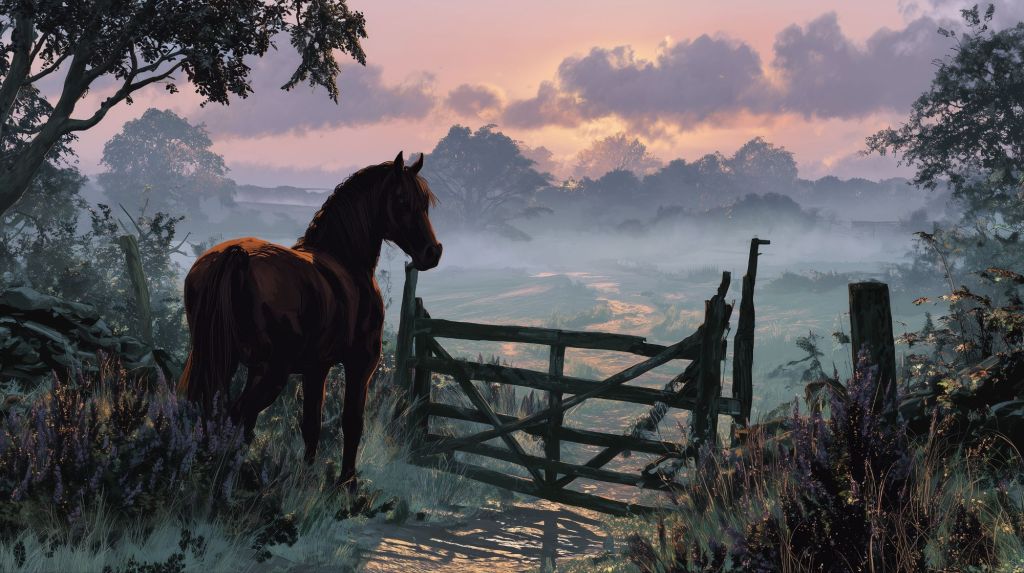
The pre-dawn mist clung to the furrows of Gareth Millbrook’s fields like the breath of sleeping earth, and through its silver veil, the familiar silhouette of Ember stood patient as carved stone beside the weathered gate. Thirty-seven years they had shared these mornings—man and mare rising with the sun to tend the hundred acres that had fed three generations of his family and countless citizens of distant Lumenvale.
Gareth’s boots whispered through wet grass as he approached the paddock, his weathered hands already reaching for the leather halter hanging on its familiar post. Ember lifted her great head at his approach, her coat still bearing the deep chestnut hue that had earned her name, though now silver threads wove through her mane like frost touching autumn leaves.
“Morning, old girl,” he murmured, his voice rough with sleep and decades of shared sunrises. The mare’s ears swiveled forward, and she extended her muzzle to brush against his palm—a greeting ritual unchanged since she had been a three-year-old filly and he a young man still learning to read the language of soil and season.
His fingers traced the familiar constellation of scars along her neck, each one a story they had written together across the years. The thin white line near her withers from the harvest when they had worked too close to the bramble hedge, both of them younger and more reckless then. The slightly thicker mark below her jaw from the winter wolves had ventured too close to the barn, when Ember had stood her ground between danger and the newborn lambs sheltering behind her.
She was the oldest thing he owned that still served daily purpose, and perhaps the most essential. Other tools wore out and were replaced—plows, harrows, the various implements that helped him coax life from stubborn earth. But Ember had been his constant companion through every season, every crisis, every small triumph that defined a farmer’s existence.
Gareth slipped the halter over her head with practiced ease, his movements economical from decades of repetition. Ember accepted the familiar weight without resistance, her dark eyes holding the calm intelligence that had made her invaluable not just as beast of burden, but as partner in the daily negotiations between human intention and natural reality.
They walked together toward the barn, where the day’s first tasks awaited. The rhythmic percussion of her hooves against packed earth provided the soundtrack to Gareth’s mental inventory—which fields needed attention, what the weather signs suggested about the coming week, how the grain stores were holding as winter approached its deepest grip.
The barn held the accumulated scent of decades: hay cured in summer heat, leather oil and honest sweat, the metallic tang of well-maintained tools, the underlying sweetness of grain properly stored. Ember moved to her accustomed place beside the large stall where the working harness hung, her positioning so precise it seemed choreographed.
As Gareth lifted the heavy collar, his shoulder twinged with the familiar ache that marked his sixty-second year. The leather was nearly as old as their partnership, maintained through countless applications of oil and countless small repairs that had given it the supple strength of something grown rather than manufactured. Ember stood motionless as he fitted the collar around her neck, lowering her head slightly to ease the process—a courtesy learned through years of mutual accommodation.
The bridle followed, then the traces, each piece of equipment settling into place with the satisfaction of puzzle pieces finding their proper configuration. Ember’s breathing remained steady throughout, her patience absolute. She understood, perhaps better than any human could, the rhythm of farm life that made such preparations essential rather than burdensome.
“Light load today,” Gareth told her, securing the final buckle. “Just checking the northern fields, then hauling the winter feed from the storage shed.”
Her ears flicked acknowledgment, though whether she truly understood his words or simply responded to the tone of routine discussion, he had long since ceased to wonder. The distinction seemed less important with each passing year.
They emerged from the barn into morning light that had strengthened from silver to pale gold. Frost still glittered on fence posts and wagon wheels, but the sun’s angle promised another day of the grudging warmth that marked late winter in the river valley. Ember’s breath created small clouds that dissipated quickly in the relatively mild air.
The wagon creaked into motion behind them, empty now but soon to carry the burdens that kept both farm and farmer functioning through the cold months. Ember’s gait found its familiar rhythm—not hurried, but purposeful, each step placed with the confidence of an animal who knew every stone and rut in the path ahead.
As they traveled the track that wound between dormant fields, Gareth reflected on the constancy that Ember represented in a life marked by inevitable change. He had buried both parents in the family plot beyond the apple orchard. His wife of thirty years had followed them five winters past, leaving him alone except for the mare who had been present for every significant moment of their life together. Children born and grown and moved to distant opportunities. Neighbors departed, new ones arrived. Even the landscape had shifted gradually—fields consolidated, new crops experimented with, old growth forest gradually converted to pasture.
But Ember remained, steady as the seasons themselves, her presence the one constant that connected his current solitude to the busy abundance of earlier decades. She had pulled the cart that brought his first son home from the midwife. She had dragged the breaking plow through soil that had never felt iron before. She had hauled stone for the wall that still marked his eastern boundary, and timber for the additions that had expanded the farmhouse to accommodate a growing family.
Now she hauled feed and pulled the lighter equipment that suited both their advancing years, but her willingness remained undiminished. If anything, their partnership had deepened with time, each understanding the other’s limitations and working within them rather than fighting against the inevitable accommodations that age demanded.
The northern fields spread before them—black earth waiting beneath patches of lingering snow for the spring planting that still lay months ahead. Gareth guided Ember along the field margins, his experienced eye reading signs that would influence decisions still weeks from implementation. The soil’s winter rest was progressing properly. Drainage patterns established during autumn preparation were holding despite the season’s varied precipitation. The cover crops sown before the first hard freeze showed healthy green beneath their protective blanket of straw.
Ember stopped without instruction when his attention fixed on a section where water had pooled despite the drainage channels. She had learned to read his body language decades ago, understanding that certain postures meant inspection time, others meant continuing forward. Her ears swiveled to track sounds he had probably missed—birds moving through the hedgerow, the distant voices of neighbors beginning their own daily rounds.
“What do you think, girl?” he asked, though the question was rhetorical. “Extend the drainage another twenty feet, or accept that corner as seasonal marsh?”
Her tail swished once, possibly in response to his voice, possibly chasing a fly that had found them despite the season. Gareth smiled, remembering his wife’s gentle mockery of his habit of consulting the mare on agricultural decisions. Though perhaps mockery was too strong a word—Sarah had understood that talking through problems aloud, even to an animal audience, often clarified thinking in ways that silent contemplation could not achieve.
They continued their circuit, stopping twice more for inspections that required Ember’s patient waiting while Gareth tested soil consistency and examined fence lines for winter damage. Each pause found her positioned optimally for resuming travel—angled correctly for the next section of track, weight distributed for easy forward motion when his inspection concluded.
The return journey carried them past the family cemetery, where weathered headstones marked five generations of Millbrooks who had worked this same earth. Ember’s pace slowed slightly as they passed, though whether from recognition of the sacred space or simple chance, Gareth chose not to analyze. Some mysteries were better left unexplored.
As they approached the farmyard, other animals began announcing their awareness of morning routines approaching. Chickens emerged from their coop with the offended dignity of creatures forced to acknowledge winter’s early darkness. The milk cow lowed from her stall, reminding Gareth that her needs would require attention once Ember’s tasks were completed.
But first, the feed had to be moved from storage to the various animals that depended on his stewardship through the lean months. Bags of grain, bales of hay, root vegetables stored in carefully maintained conditions—the accumulated surplus that made survival possible when earth itself offered little sustenance.
Ember backed the wagon to the storage shed with minimal guidance, her positioning so precise that the loading would require no adjustment of the cart’s location. Gareth began transferring bags from shed to wagon, each one representing calculations made months earlier about quantities needed versus quantities available, about the balance between prudent preparation and optimistic faith in spring’s eventual return.
The mare stood motionless during loading, though her ears tracked his movements and her eyes occasionally followed his path between shed and wagon. Her patience seemed infinite, yet Gareth knew it was actually finely calibrated—she would wait precisely as long as necessary for productive work to be completed, but would signal restlessness if he lingered beyond purposeful activity.
With the wagon loaded, they began the distribution circuit that would carry feed to animals scattered across the farm’s various paddocks and shelters. The weight behind them changed Ember’s gait slightly, but her strength remained adequate for the task. He had reduced the loads in recent years, making multiple trips rather than testing her capacity against the heavier burdens she had carried without complaint in younger days.
At each stop, Ember positioned herself for optimal unloading while Gareth parceled out appropriate quantities to animals whose survival depended on his careful stewardship. Pigs that would provide meat for next year’s table. Sheep whose wool would become cloth, whose milk would become cheese. Chickens whose eggs supplemented the sparse offerings of winter’s limited garden.
Each animal represented both responsibility and investment—creatures whose wellbeing directly influenced his own survival through the connected cycles that defined agricultural existence. Ember understood her role in maintaining these connections, her daily service enabling his care for the larger community of life that the farm supported.
The final stop brought them to the barn where Ember herself would receive her portion of the distributed feed. Gareth unhitched the wagon with movements made automatic by repetition, then led her to the stall where her own winter supplies waited. Oats and hay, carrots saved from the autumn harvest, the careful mixture of nutrients that would maintain her health through months when pasture offered little sustenance.
As she began eating, he allowed himself a moment of pure appreciation for the constancy she represented. Thirty-seven years of shared labor, shared weather, shared purposes that connected them more deeply than ownership or utility could explain. She was not just the oldest thing he owned that he still used daily—she was the living bridge between his past and his continuing present, the companion who had witnessed every iteration of his life and adapted to each one without losing her essential nature.
Tomorrow would bring the same routine, modified only by seasonal variations and the gradual accommodations that aging imposed on both of them. And the day after that, and the day after that, until one or both of them could no longer sustain the partnership that had defined the rhythm of their existence.
But tonight, as winter light faded toward another cold evening, Gareth found comfort in the sound of Ember’s steady chewing, in the warmth radiating from her great body, in the simple fact that they had shared another day of purposeful work and would, with luck and care, share many more before time claimed either of them.
The oldest thing he owned, and still the most essential. Not because she was irreplaceable—though the thought of replacing her felt impossible to contemplate—but because she carried within her vast memory the accumulated knowledge of how to be useful, how to be patient, how to endure whatever weather came while maintaining the gentle strength that made such endurance possible.
In a world that sometimes seemed to change too quickly for comfort, Ember represented the deep currents that remained constant beneath surface turbulence. As long as she continued their morning greeting, their daily collaboration, their evening completion of shared tasks, Gareth knew that some essential continuity would persist regardless of whatever else time might alter or take away.

 Chadwick Rye
Leave a comment