
What is your favorite season of year? Why?
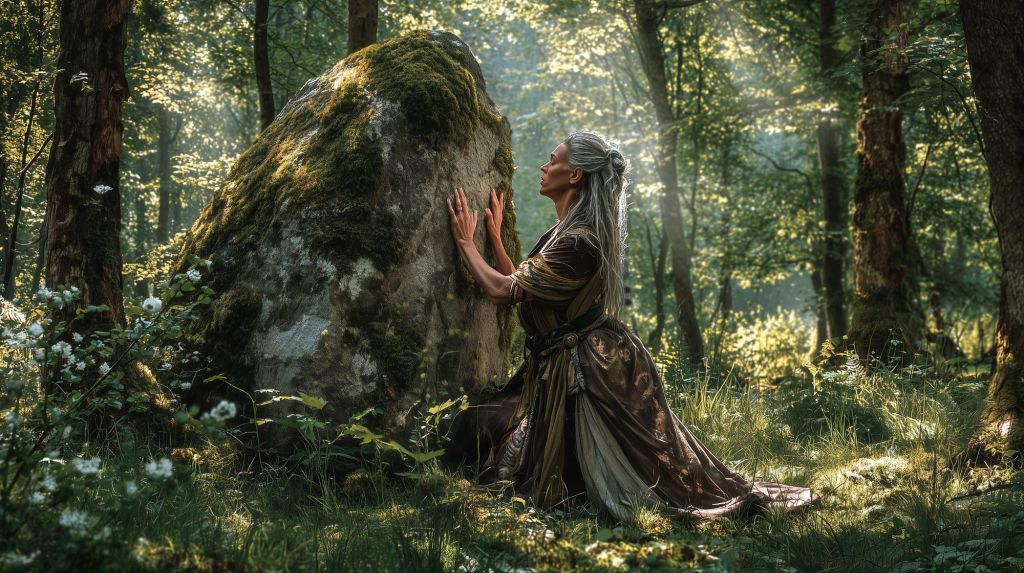
Kestrel Thornweave knelt beside the moss-covered boulder, her weathered hands pressed against its cool surface as the first tentative warmth of spring morning filtered through the canopy above. Around her, the Whispering Grove stirred with the season’s gentlest awakening—a symphony of renewal played in soft whispers rather than triumphant fanfare.
“This,” she murmured to the ancient oak whose roots had grown around her meditation stone over the decades, “this is when the world remembers how to breathe.”
Spring held a particular magic that the other seasons, for all their dramatic beauty, could never quite capture. Summer blazed with overwhelming abundance, its air thick with the drone of countless insects and the heavy perfume of flowers drunk on their own nectar. Autumn painted the world in spectacular death-songs, but carried with it the melancholy weight of endings. Winter brought the stark clarity of dormancy, but also the harsh bite of survival’s edge.
Only spring offered this perfect equilibrium—the season of gentle promises rather than urgent demands.
Kestrel rose from her morning meditation, bare feet finding familiar purchase on stone and root. The air held that distinctive coolness that spoke of snow-melt in distant mountains and morning dew that hadn’t yet surrendered to the sun’s persuasion. She drew the crisp atmosphere deep into her lungs, tasting the mineral sweetness of earth awakening from winter’s long sleep.
The absence of summer’s insect chorus created a spaciousness that allowed subtler voices to emerge. Without the aggressive buzz of flies or the territorial hum of bees defending their territories, Kestrel could hear the conversations that mattered most to her druidic senses: the whispered exchanges between seedlings as they negotiated space and sunlight, the gentle percussion of sap rising through bark, the almost inaudible sigh of soil warming enough to resume its ancient work of transformation.
“Even you seem more contemplative,” she observed, addressing a red squirrel that had paused in its territorial declarations to regard her with curious dark eyes. The creature’s usual frenetic energy appeared tempered by spring’s unhurried pace, its movements deliberate rather than manic.
In her forty-three years as keeper of this grove, Kestrel had learned to read the seasons like sacred texts, each one offering distinct wisdom to those patient enough to listen. Spring’s lesson was perhaps the most profound yet hardest to accept: that true power often lay not in dramatic action but in quiet preparation, in the slow accumulation of potential that would later manifest as summer’s abundance.
She moved through her morning rounds with ritualistic precision, checking the tender shoots of herbs that would become essential medicines by midsummer, noting which trees showed signs of new growth, documenting the subtle shifts in soil composition that indicated the underground networks were awakening from winter dormancy. Each observation was both scientific record and spiritual communion, data gathering transformed into prayer.
At the grove’s eastern edge, where cultivated garden space met wild forest, Kestrel paused beside her collection of seasonal markers—carved stones arranged in patterns that helped her track the intricate dance between light and shadow, temperature and growth, the thousand small variables that determined whether her charges would thrive or merely survive the coming year.
The morning light struck the markers at precisely the angle she had been waiting for, confirming what her other senses had already suggested: the true heart of spring had arrived. Not the calendar’s arbitrary declaration or the community’s collective agreement, but nature’s own recognition that the balance had shifted from dormancy toward growth.
“Time to begin the real work,” she said softly, though whether she spoke to the grove, to herself, or to the intricate web of life that connected all things remained delightfully ambiguous.
From her herb-gathering pouch, she withdrew a collection of seeds she had saved from the previous year’s most successful plants—healing herbs whose potency had been enhanced through generations of careful cultivation and patient selection. Spring’s cool soil would cradle these potential medicines without the aggressive heat that might force premature germination, allowing each seed to unfurl at its own optimal pace.
As she worked, pressing seeds into earth still soft with morning moisture, Kestrel felt the familiar sense of collaboration that defined her favorite season. Summer demanded constant intervention—watering, weeding, protecting vulnerable plants from heat stress and insect damage. Autumn required frantic harvesting before frost could claim uncollected bounty. Winter imposed the harsh discipline of survival, where mistakes in preparation could mean the difference between abundance and scarcity.
But spring invited partnership. The season’s moderate temperatures and gentle rains created conditions where human intention could align harmoniously with natural processes, where careful planning enhanced rather than fought against the earth’s own wisdom.
A movement in her peripheral vision drew her attention to a doe emerging from the forest’s deeper shadows, her sides heavy with the promise of fawns that would arrive when the season had fully established its gentle dominion. The animal moved with the unhurried confidence of creatures who understood that spring’s gifts came to those who waited for the proper moment rather than forcing premature action.
Kestrel remained motionless, allowing the doe to drink from the small spring that fed her garden, both women—human and deer—sharing the quiet understanding that this season belonged to preparation rather than urgency. When summer arrived with its demands and complications, when the air filled with the aggressive energy of insects and the overwhelming abundance of peak growth, there would be little time for such peaceful communion.
But here, in spring’s gentle embrace, with cool air carrying the promise of warmth without summer’s oppressive weight, with soil soft enough to welcome new life but not yet hosting the complex ecology of insects that would later claim their territories, Kestrel found the perfect balance between action and contemplation that had drawn her to the druidic path decades ago.
As the doe melted back into forest shadows and the sun climbed higher toward its daily zenith, Kestrel completed her seed planting and settled once more against her meditation stone. Around her, the Whispering Grove continued its quiet work of renewal, each leaf and root and grain of soil participating in the season’s fundamental miracle: the transformation of dormant potential into living possibility.
Spring, she reflected, was the season that remembered dreams were meant to grow slowly, in the cool quiet spaces between winter’s ending and summer’s beginning, where patience was rewarded with perfect timing and gentle progress proved more sustainable than dramatic transformation.
Here, in this perfect balance of cool air and awakening earth, Kestrel Thornweave found not just her favorite season, but a template for living itself—unhurried, purposeful, attuned to the subtle rhythms that connected all growing things in the eternal dance between rest and renewal.

 Chadwick Rye
Leave a comment